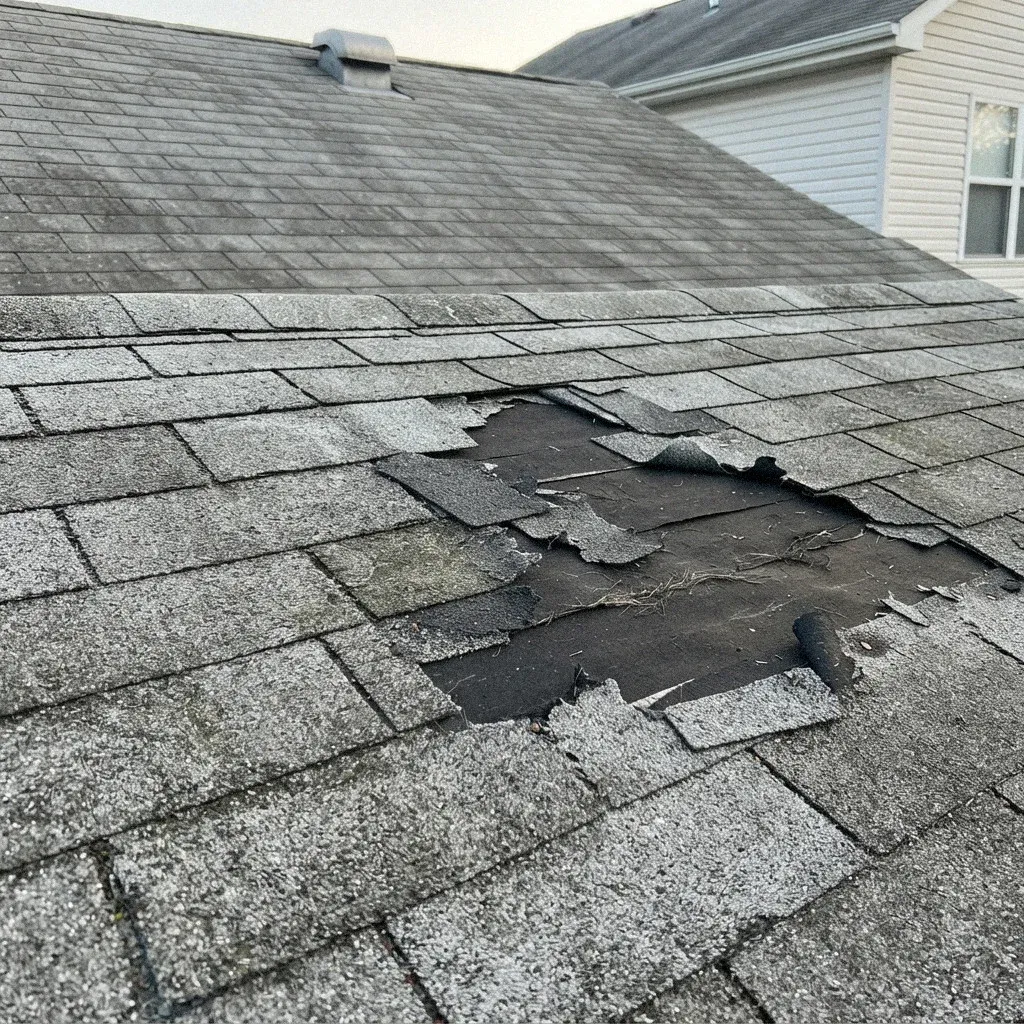
Trenton Roof Leak Repair for Underlayment
Tile access and the extent of failed material help determine whether underlayment repair can stay within one roof area.
A localized underlayment repair may stop a roof leak when an inspection exposes one bounded failure and the material around it remains sound enough to support a repair. Widespread breaks, weak seams, or hidden sections may call for further evaluation or broader work.
How Underlayment Affects Roof Leak Repair
A stain that stays dry may be watched briefly, but recurring dampness or a fresh drip calls for an inspection; it cannot show whether the underlayment failure is contained. In Trenton, the roof covering above the suspected area helps frame that assessment. The key question is whether the layer beneath it has one bounded defect or damage continuing beyond the opening. The defect may remain partly hidden until the roof covering is opened for a closer look.
Underlayment sits beneath the roof covering, adding a water-shedding layer when rain passes the outer surface. If it splits or pulls apart at a seam, water may reach the structure even while the covering looks undisturbed. For a Trenton home, that makes the visible surface only part of the decision: the roofer must see enough of the underlying material to judge its condition. The repair question is whether the defect can be isolated without leaving weakened material around it.
A repair boundary is more convincing when the exposed damage ends and the material beyond it stays flexible, attached, and continuous. One small puncture or separated overlap can support a localized approach if nearby sections remain sound. In Hamilton Township, as in Trenton, a ceiling mark alone cannot establish that boundary. If the roof opening reveals no clear transition from damaged to usable underlayment, the owner has reason to request a fuller assessment before treating the stain as a contained problem.
Tile Access in Roof Leak Repair
On a Trenton tile roof, underlayment matters when rain gets past the tiles and reaches a damaged seam or tear. A localized repair is more plausible when the entry point corresponds to one bounded defect and the surrounding material can support a continuous sealed overlap. Water can travel beneath adjacent tiles, so the first visible damp area may not show where it entered. The same component-level assessment applies near Route 1 and the Isaac Watson House.
Once uncovered, the material’s condition matters as much as the hole itself. Underlayment that stays secure beside a tear gives a repair a sound surface to tie into; brittle, loose, or deteriorated edges may not hold that connection. A photo can help the owner in Ewing Township compare the proposed boundary with what the roofer observed, while a written explanation should identify any area that could not be examined. A dry-looking ceiling does not answer those roof-level questions.
Roof shape can limit what one opening reveals. A valley, wall junction, or penetration may bring several layers together, while overlapping tile courses can hide material beyond the first exposed edge. In Trenton, the inspection should account for those concealed transitions before the roofer calls a failure localized. If access leaves part of the suspected area unseen, the owner should know that the repair boundary rests on incomplete evidence and may need reassessment if moisture returns.
Setting a Roof Leak Repair Boundary
A repair boundary becomes harder to defend when the exposed material has separated tears in different areas, crumbles at the edges, or keeps splitting beyond the first damaged section. Those signs suggest the weakness may extend past one patch, so replacing a broader run can address more of the failed layer. In Trenton, a roofer can document the limits of the damage around a home near the Raritan Canal or Sayen Gardens; those landmarks do not establish any particular roof’s condition.
Broader replacement becomes more plausible when inspection finds separated seams across a run, several distinct breaks, or material that no longer holds together beyond the first damaged spot. That evidence suggests the weakness is not confined to one patchable area. A home near the Raritan Canal is not presumed to have any particular roof condition; the decision still depends on what the opening shows. The roofer should explain which findings extend the scope and where sound material resumes.
When Roof Leak Repair Needs Broader Work
Before work begins, the written scope should identify the roof area, the visible underlayment defect, and the planned repair limits. It should also say how tiles or other covering will be removed and returned, since access is part of the work needed to reach the layer. The scope can describe how the exposed underlayment will be checked before the repair is closed. The ordinary-maintenance rule for some roof-covering work is limited.
After the opening is repaired, photos taken before the covering goes back can show whether the damaged edge matched the agreed boundary. The owner should keep a note of material found outside that limit and any portion left unseen, because those details matter if water appears again. A stain that remains dry can be watched, but fresh dampness or renewed dripping warrants another inspection. For homes in Hamilton Township or Ewing Township, the same evidence-based distinction applies: indoor appearance alone cannot confirm the roof repair held.
Evidence for Roof Leak Repair Scope
- Ask for photos that show the underlayment defect alongside enough surrounding material to judge whether its edge is contained.
- Confirm which roof covering must be lifted for access and how the pieces will be protected and reset.
- Have the written scope note any underlayment area left hidden or outside the repair boundary.
- Near Assunpink Creek, compare exposed underlayment at the suspected leak with material under adjacent tiles; a distinct defect supports review for a bounded repair.
- At a Trenton home near Cadwalader Park, check whether nearby tiles can be lifted intact, since access limits affect how much roof covering must be handled.
- For a roof near the Delaware River, compare separate exposed areas for similar deterioration; repeated failure may indicate that one repair zone is too narrow.
What Owners Ask About Leaks
When is underlayment damage limited enough for a local repair?
A localized underlayment repair can be suitable when opening the roof reveals one distinct tear or failed seam, with material around it still secure and able to accept a repair. The covering must allow access to enough of the layer to judge that boundary. In Trenton, a roofer should show the exposed condition and explain any section that remains hidden before calling the work limited.
How does tile access affect underlayment repair?
A localized repair may stop the leak when inspection finds one contained failure, the material around it remains sound, and the repaired section can be sealed into the surrounding underlayment. The work also needs to leave the tile and nearby flashing able to direct water away from joints. If damage continues outside that area or the material will not hold a sound repair, a wider replacement may be needed. A Trenton homeowner can ask for the proposed boundary and inspection findings.
What indicates underlayment failure may need broader replacement?
A roofer may advise a wider repair when exposed material has multiple breaks, loose seams, or weak areas continuing beyond the proposed patch. Ask which observed conditions make the original boundary unsuitable and where the underlayment appears sound again. If part of the layer could not be seen, that uncertainty should be recorded so the owner understands what the recommendation does and does not establish.
Ask for an Underlayment Repair Review
Ask the pros we connect you with to assess tile access, the visible underlayment condition, and whether the damage supports a localized repair.
Call (609) 934-1587