Apartment Roof Leak Repair
Occupied Building Repair
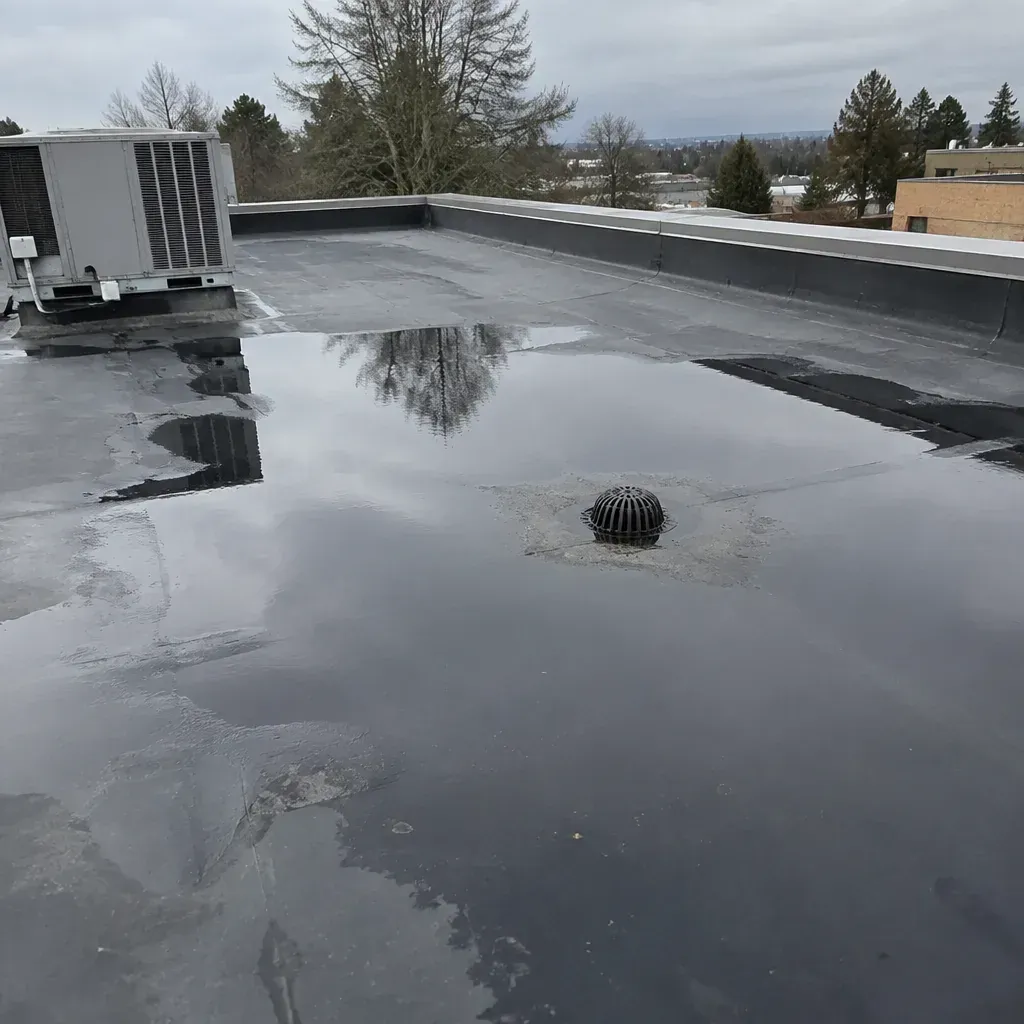
Trace the office roof leak, identify the affected suites, and plan repair access around tenant work.
The roofer compares suite reports with roof and attic evidence, identifies the likely entry area, and scopes a targeted repair. Building staff can reduce disruption by coordinating tenant access, quiet hours, and any temporary room restrictions before work starts.
An office roof leak can interrupt work long before anyone knows which roof area needs attention. In Trenton, start a report with the floor, suite, and nearest useful room identifier, then note where water appeared and when. This gives the pros we connect you with a way to compare the indoor report with the roof layout. A location near Veterans Park or elsewhere in the city is only a starting clue; water may travel before it reaches an office ceiling.
Ask the person reporting an office roof leak to describe what changed in the room: a drip, a wet ceiling tile, or a mark that has spread. Note whether it followed rain or appeared later, without guessing at the cause. In Trenton, reports tied to a floor and suite help facilities staff spot patterns across occupied areas. If several tenants notice different symptoms, keep each account separate so the repair review can compare them without merging distinct conditions.
Before requesting an assessment, gather a roof plan if available, the best access route, and the contact who can arrange entry. Mark rooms that need advance notice and identify any access limits. For a Trenton office near Martins Lake, for example, the building’s own roof access details matter more than the landmark. Clear instructions help the pros we connect you with reach the relevant roof area efficiently and reduce delays for tenants waiting in occupied suites.
The room where water shows up does not necessarily sit below the opening in the roof. It can run across decking or framing and emerge at a ceiling joint elsewhere, so the reported floor and suite guide the search without deciding it. In a Trenton office building, the roofer can compare interior evidence with roof conditions above and around that part of the building. That trace helps narrow the affected area before repair work is proposed.
Roof access planning should account for how staff use the building throughout the day. Confirm the entry point, sign-in procedure, hatch route, and any hours when movement through a suite would interrupt work. A roof can be hazardous when wet or steep, so inspection belongs with a roofer using suitable equipment and fall protection. For a Trenton property serving tenants near The College of New Jersey, agreed access steps help keep the visit orderly while staff continue their work.
| Reported Area | Water Sign | Roof Zone |
|---|---|---|
| Property ID | Building code and street address | Keeps service notes with the correct office site |
| Affected suite | Floor, room, and ceiling location | Pinpoints the report without assuming the stain marks entry |
| Report timing | When noticed, rain conditions, and recurrence | Helps compare staff observations with roof findings |
| Roof section | Plan area, drain bay, or penetration | Narrows review across a large commercial roof |
| Inspection record | Labeled interior and roof photographs | Shows which visible conditions informed the repair choice |
| Repair performed | Component addressed and corrective work | Defines completed work for later review |
| Tenant coordination | Suite access, quiet periods, and restricted routes | Records conditions that shaped work sequencing |
| Map reference | Route 1, Old Barracks Museum, or Mill Hill Park | Orients Trenton records with familiar local points |
A useful inspection record connects the interior report to the roof area examined, then states what the roofer could observe. It may describe the roof surface and the nearby transitions or openings checked, with photos that show relevant conditions. For a Trenton facilities manager, that account gives maintenance staff a clear basis for deciding what needs repair and what should be watched. It also lets another reviewer understand how the finding relates to the affected office without relying on memory.
If flashing is involved, the notes should identify the transition or penetration where it sits and describe the observed condition. Flashing directs water away from joints, so a gap or damaged section can matter even when the interior mark lies elsewhere. In Trenton, a written description paired with a roof photo can help the property team understand why that location was addressed. The record should distinguish what the roofer saw from any explanation that remains uncertain until further evaluation.
After commercial office roof repair, ask for a brief work summary naming the roof area and component addressed. Photos taken before and after, when available, can make the scope easier to review later. At a Trenton office, keep that summary with the original tenant report and inspection findings, so the sequence from symptom to repair is visible. This creates a practical reference for facilities staff if another report arrives from the same suite or a nearby part of the building.
Choose a work window after the roofer explains which tasks may create noise, limit roof access, or affect a room below. A repair over a meeting space may call for a different time than work above an unoccupied area. In Trenton, the facilities contact can coordinate with tenants and reserve a route for the pros we connect you with. A defined schedule helps people plan around the work and gives the roofer room to complete the agreed scope safely.
During the repair, give tenants a clear contact for reporting a new symptom and ask them to include the room and time. That detail can help facilities staff tell whether water appeared before, during, or after work. For a Trenton office near Armstrong Memorial Park, the contact process can be set internally without asking each tenant to approach the roof area. A timely report lets the manager share relevant changes with the roofer and add them to the work record.
Before approving the scope, ask which roof components the proposed work addresses and whether any additional evaluation is recommended. Roof work requirements can depend on the property and scope, so confirm applicable requirements with the relevant Trenton building office rather than relying on a general assumption. A written scope helps facilities staff compare the proposed task with the inspection findings. It also clarifies what the roofer expects to complete, which makes later review more straightforward.
If an office building leak returns, compare the new report with the earlier room details, inspection photos, and repair summary. A similar ceiling mark alone does not establish that water entered through the same place; the path can lead away from the roof opening. In Trenton, matching records can help the roofer check whether the prior work area is relevant or whether another section needs attention. Add the new observation as its own entry so the history remains clear.
The cost of a leak inspection at a Trenton office can depend on the roof area to be examined, access arrangements, and the documentation requested. A complicated route or a larger area may take more assessment time, while a focused report has a different scope. Ask what the inspection includes and whether photos or a written summary are part of the proposed work. Clear expectations help facilities staff compare the service scope with the building’s needs before scheduling.
Keep the tenant’s first report, the inspection findings, roof photos, approved scope, and completed work summary together under the Trenton property record. If a later concern comes from a suite near Memorial Park or elsewhere in the building, add its location and date as a separate entry. That history gives facilities staff and the roofer a shared reference when reviewing recurring reports, and it reduces the chance that an old observation is mistaken for a new finding.
In an office building, a leak report from one suite may point to a roof area above another floor, so tracing the route comes before choosing a repair. Photographs of interior damage give building staff a visual record to review as repair work is planned. In Trenton, a clear plan also accounts for occupied rooms, roof access, and work noise. That lets building staff arrange entry and timing before repairs begin, reducing avoidable interruptions while keeping the affected area and proposed work clear.
A countywide list cannot confirm an individual home's eligibility, so ask the pros we connect you with whether they can reach your address for roof leak work, includingEwing Township, Hamilton Square and Trenton. If the property may be beyond the usual route, request an address check and learn what costs attach to an on-site assessment.
A retail center may receive a charge for each assessment or a plan scaled to roof area and inspection frequency. Use $90–$350 to frame the budget; roof height, access limits, occupied spaces, and the need to document several sections can change the final quote.For a commercial building in Trenton, roof dimensions and layout can add sections, seams, edges, and penetrations to the materials list, changing the estimate. When calling, describe the building footprint, roof access, known covering, and where water appears; Veterans Park and Memorial Park can serve as location references.The full repair-cost breakdown is in pricing guide, while commercial overview explains the structure of a scheduled commercial inspection program.
Occupied Building Repair
Trenton · Isaac Watson House
Route 1 Retail Roof Repair
Give the roofer the affected suite locations, tenant schedules, and any rooms that cannot be interrupted during business hours. The inspection can identify likely roof entry and the work area; building staff can then agree on access, noise windows, and any temporary room restrictions. For directions in Trenton, include the property entrance and a familiar marker such as Trenton Transit Center. Confirm the work window with affected occupants before the repair visit.
Yes. Water may pass beneath the roof surface before becoming visible indoors, so reports from separate suites can relate to one roof area. The roofer can compare each report with the building layout and inspect relevant roof components and attic evidence. In Trenton, provide the floor and suite for every report, plus the roof access point. The findings help distinguish one shared leak path from separate problems and guide the repair scope.
Schedule noisy work when the affected suites are less occupied, if the repair conditions allow that timing. Building staff should tell tenants which areas need access, when noise is expected, and whether a route or room will be temporarily restricted. Share roof entry rules and any constraints on equipment movement with the roofer. For a Trenton property, a landmark such as the New Jersey State House can help clarify directions, while the street address and entrance identify the site.
A leak inspection fee can vary with the roof area to assess, access conditions, and the time needed to examine interior reports alongside roof evidence. Repair cost depends on the material and component involved, the extent of the affected area, and the work needed to address it. A written scope can separate the inspection from proposed repairs and explain what findings support each step.
Gather suite locations, tenant schedules, and roof access instructions, then request an office leak assessment in Trenton.
Call (609) 934-1587